When a company considers purchasing a new machine, the first question is usually: „How much does it cost?“ However, when making the right business decision, an even more important question is: „How long will it take for this investment to pay off?“
A new machine should not be viewed solely as an expense, but as an asset that creates additional value every day. Increased production capacity, shorter processing times, less material waste, fewer errors and faster delivery of the finished product to the customer can directly affect the company’s profitability.
This is why an investment in the right machine can pay off much faster than it may initially appear.
How can you assess a machine’s profitability?
When choosing a machine, its purchase price is not the only important factor. A machine with a higher initial cost may operate faster, more accurately and with less material waste, allowing the investment to pay off within a shorter period.
On the other hand, a less expensive machine that operates more slowly, produces more errors or requires frequent corrections may create higher costs in the long term.
The analysis should take the following factors into account:
- the total value of the investment
- the actual daily and monthly production capacity
- working hours saved
- reduction in material waste
- the number of errors and rework processes avoided
- additional operating costs
- the number of orders the company can realistically complete
The basic formula is:
Payback period = Total investment ÷ Average monthly net effect
The monthly net effect includes additional revenue and savings in time, materials and labour, minus the new operating costs.
It is important that the calculation is based on the actual number of orders and the machine’s real utilisation rate. Increased capacity generates a financial return only if the company can use it effectively.
Proper operator training and the availability of servicing and spare parts also affect profitability. Every unplanned downtime extends the period required to recover the investment.
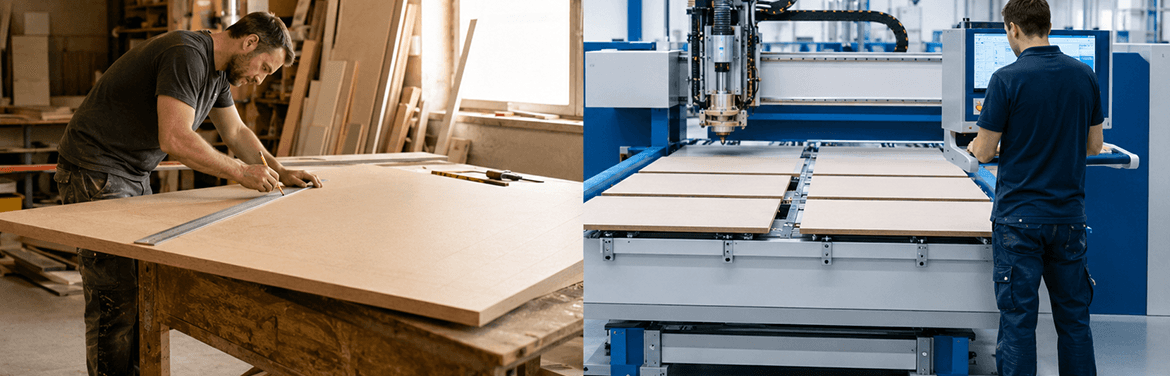
Where does the return on investment come from?
-
Up to 2× greater production capacity
A modern machine can produce significantly more parts during a single shift. If the company has enough orders, the increased capacity allows it to complete a greater volume of work without a proportional increase in the number of employees or working shifts.
-
Up to 50% shorter processing time
A shorter processing time per workpiece means that more operations and orders can be completed during the same working day. Automatic positioning, digital control and repeatable programs reduce the time required for measuring, setup and manual processing.
This is particularly important in production processes where one operation creates a bottleneck and slows down the entire workflow.
Material is often one of the largest production costs. Better utilisation of panels, profiles or sheet metal, more precise processing and optimised layouts can generate significant monthly savings.
Even a reduction of just a few percent in material waste can have a major impact when a company processes large quantities of material.
-
Fewer errors and rework processes
Every incorrect dimension, inaccurately drilled hole, poor-quality cut or improperly bent workpiece results in wasted material, lost working time and extended deadlines. CNC technology provides greater accuracy and repeatability, reducing dependence on manual measurements and individual judgement.
Reducing errors does more than generate financial savings. It also contributes to more consistent quality and greater customer confidence.
-
Faster delivery and more accepted orders
When production is faster and more predictable, the company can offer shorter lead times and more reliable delivery. This creates an opportunity to accept orders that previously had to be declined due to insufficient capacity.
In a market where customers are increasingly unwilling to wait, speed becomes a genuine competitive advantage.
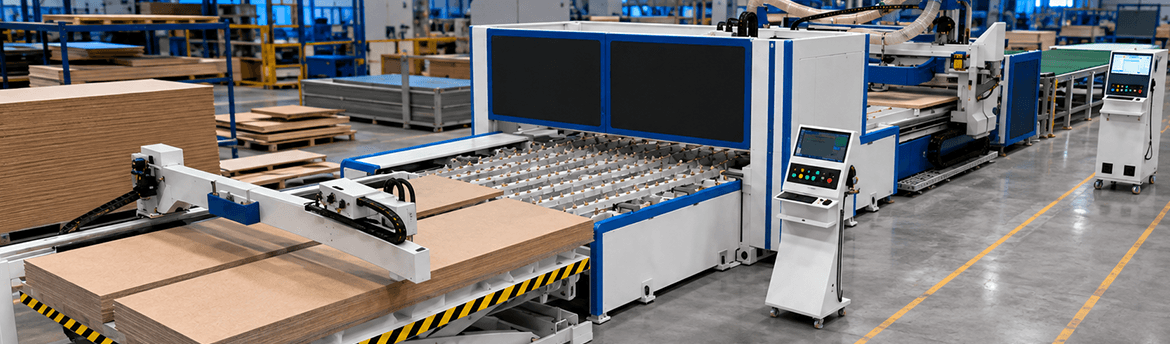
When can an investment in a machine pay off faster?
The payback period is usually shorter when:
- the machine eliminates the main production bottleneck
- the company already has a sufficient number of orders
- the machine operates regularly and has a high utilisation rate
- slow manual operations are replaced
- expensive materials are processed and the savings generated by reducing waste are significant
- the new technology enables the production of products with greater added value
- operators are properly trained
- fast servicing and readily available spare parts are provided
When can the return on investment be slower?
The investment may take longer to pay off if the machine is underutilised, if there are not enough orders, if an unsuitable configuration has been selected or if production is not prepared for the new capacity. The first step is to analyse what is being produced, in what quantities, where the most time is being lost and which operation creates the highest cost.
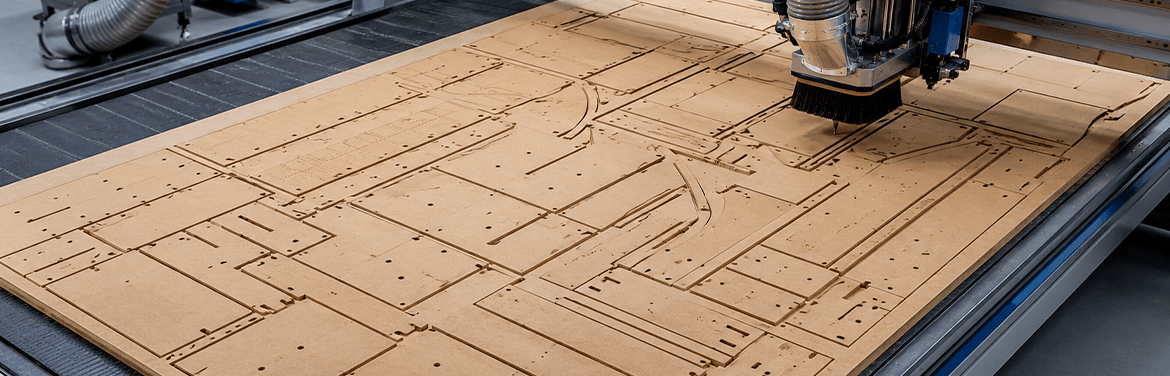
Five questions to ask before investing in a new machine
- Which operation is currently slowing down production?
- How many working hours and how much material are lost each month?
- How many additional products can realistically be sold?
- What will the new operating costs be?
- Are installation, training, servicing and spare parts provided?
Servicing and support directly affect profitability
A machine that is not operating does not generate a return. Unplanned downtime, long waiting times for a spare part or insufficient training can significantly extend the payback period.
For this reason, the entire solution should be considered when assessing the investment: selecting the right configuration, delivery, installation, commissioning, operator training, service response time and spare parts availability.
With RADEK, you receive more than just a machine—you gain a partner who helps you select a solution based on your company’s products, capacity and business objectives. Our team provides delivery, installation, training, service support and spare parts.
🌐 Learn more about RADEK machines and production solutions
📩 Contact us for an offer and an individual analysis of your production